Posts Tagged ‘Western North Carolina Insane Asylum’

Insanity on the Rise

Sunday, September 2nd, 2012

Government Statistics About Insanity

Because it was more cost-effective to house many patients rather than a few, insane asylums tended to grow larger and house more patients over time. Dr. Harry Hummer of the Canton Asylum for Insane Indians felt his disadvantage in numbers very keenly. He strove continually to find ways to cut costs, and to increase his number of patients. The latter required an increased capacity for his institution, which Congress did not necessarily support. Hummer repeatedly made a case for more buildings, more farmland, and more patient beds.

Though no one ever conclusively settled the question of whether or not Indians had as much, more, or less insanity than whites, statistics about the growing number of insane were on Hummer’s side. The various states had compiled statistics on the number of insane for many years, and the rate per 100,000 rose steadily each decade of the census. In 1840, 50.7/100,000 of the population were reported as mentally ill, while 169.7/100,000 were reported so by 1890.

The number of insane in hospitals (all races) had risen to 252.8/100,000 by 1920, though the census also shows that Indian hospitalization was only 104.5/100,000. The figures for Native Americans may have been skewed due to a lack of access to mental health care, or lack of room at state mental institutions or at the Canton Asylum. The Native American population stood at 244,437 in 1920. Even with their remarkably low rate of hospitalization for insanity (it was 259.8 for whites) Hummer could have conservatively estimated the number of insane Indians to be around 250. In 1920, Hummer had only 86 patients.

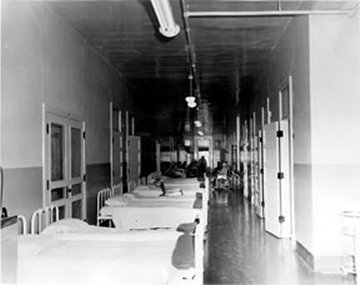
Patient Beds in Hallway Due to Overcrowding, Colorado Insane Asylum

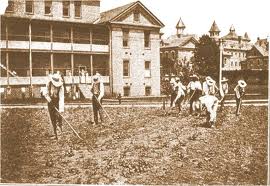
Patients Working in Fields at Western North Carolina Insane Asylum, courtesy Western Piedmont Community College

______________________________________________________________________________________

Stable Jobs

Thursday, February 23rd, 2012

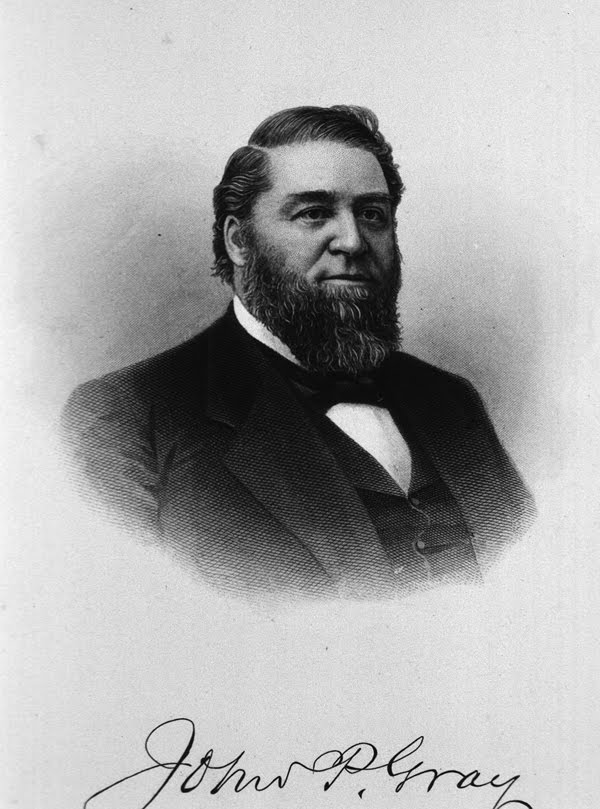
Dr. John Gray, Superintendent of the New York State Lunatic Asylum at Utica

Every insane asylum superintendent faced challenges that made the job more difficult. Lack of funds and overcrowding were two perennial problems, along with shallow labor pools and constant administrative tasks. Most superintendents had to take an active role in overseeing new construction, as well as drumming up support for it in the first place. Still, for many alienists, superintendent was still the plum job.

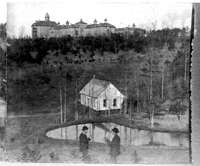
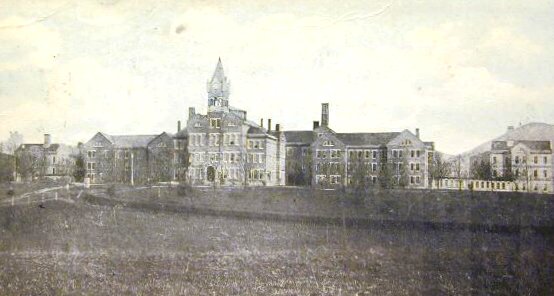
After taking time out for the Civil War, Dr. Patrick Livingston Murphy graduated as a physician from the University of Maryland at the age of 23. He settled in his home state of North Carolina, in Wilmington, and began his practice. He found “the routine of practice irksome” for some reason–he may have been bored by the types of cases he treated, or his practice may have been too small to support him. When he heard that there would be a new asylum in Broughton (the Western North Carolina Insane Asylum), Murphy immediately applied for a position at the Western Virginia Asylum to obtain experience. As soon as the Western North Carolina asylum opened, he applied for the superintendent’s position. He got it, and remained the asylum’s superintendent for the next 25 years.

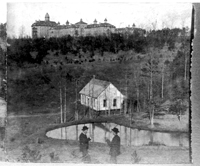
Western North Carolina Insane Asylum, circa 1886, courtesy Burke County Public Library

______________________________________________________________________________________

Slow to Change

Thursday, November 10th, 2011

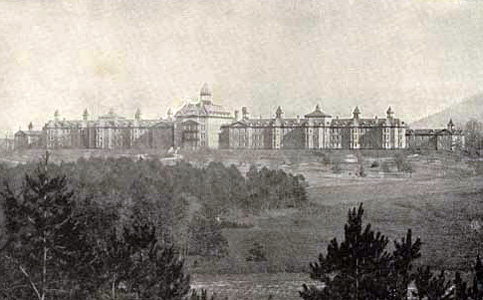
Western North Carolina Insane Asylum

Early alienists knew little about why a person became insane, but they were always willing to guess. The superintendent of Western North Carolina Insane Asylum reported on the causes for admission to the facility in 1888. They included: the Civil War, disappointment, jealousy, menstrual irregularity, nostalgia, and political excitement. In 1908, the same asylum listed these causes for admission: brooding over sin, cigarette smoking, climacteric worry, desire to marry, ear disease, fear of child-birth, fear of pregnancy, fright, and hard work and nose bleed.

We seem to be living in more enlightened times, but today’s psychiatric profession has its own absurdities. The current Diagnostic and Statistical Manual of Mental Disorders lists “caffeine-induced sleep disorder” and “mathematics disorder” as valid mental illnesses. Their list has risen from 265 recognized disorders in 1980 to 365 today.

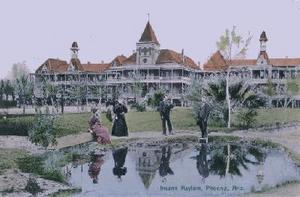
Insane Asylum, Phoenix, Arizona

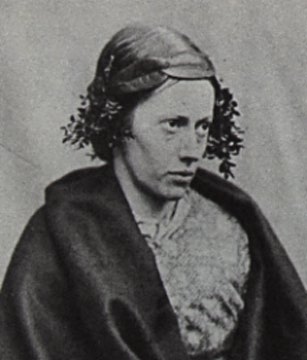
Patient in an Insane Asylum, photographed by Dr. Hugh Welch (Britain)

______________________________________________________________________________________

Dying Insane

Thursday, October 27th, 2011

Bromide Advertisement

Many patients at insane asylums had physical, as well as mental, health problems. Epilepsy was a particular problem for doctors, who could not even control the condition until bromides were introduced to calm symptoms. Aside from the usual causes of death like heart failure or exhaustion, patients sometimes died from suicide, or after a violent episode with attendants or fellow patients in which rough treatment could have been a contributing factor. One patient at Southwestern Lunatic Asylum in Virginia died from “swallowing pins, needles, and buttons, to which she was much addicted.” Another unusual cause of death, at Western North Carolina Insane Asylum, was from “gangrene of external genitals.”

The minutes of an 1892 meeting of  Southwestern Asylum’s executive committee discussed the death of an inmate who had simply walked off the grounds one day in the middle of  December. Staff searched for him unsuccessfully, and his body was discovered two weeks later, some distance from the asylum. He had doubtless died of exposure. Though they deplored the man’s death, the committee decided that they would rather allow patients a degree of freedom and risk such an incident, as deprive all of freedom on the off chance that someone else might escape in the future.


Southwestern Lunatic Asylum

Western North Carolina Insane Asylum, circa 1886, courtesy Burke County Public Library

______________________________________________________________________________________