Posts Tagged ‘Dakota Territory’

Settling South Dakota

Thursday, July 26th, 2012

A Trapper's Shack

Almost as soon as Congress created Dakota Territory  (see last post), its new territorial legislature began establishing counties. The legislature established Lincoln County during its first session in 1862. Only two signs of white civilization marked Lincoln County at this early date: a road crossing its northeast corner, and a small shanty on the Sioux River. The shanty had been built by trappers Dutch Charley, Bill Tunis, Old Ross, and his two sons, between Beaver Creek and the Sioux River. This small dwelling was an ideal place to capture game, and gave the area its first name, Trapper Shanty. For several years, this shanty was the only structure in Lincoln County, and became popular with travelers between Sioux City and Fort Dakota. Later, the area around Trapper Shanty became Canton, South Dakota, which eventually won the site selection for the government’s asylum for insane Indians.

The people of Canton, South Dakota had always dreamed big. Another old name for the town was Commerce City, though it was never an official one. Land speculators (circa 1850s) mapped the area and created the town there, but Commerce City doesn’t seem to have existed in any legal sense. Canton was also known as Gate City, capitalizing on the idea that it was a gateway into Dakota Territory. It may have seemed so in its early days, and my next post will discuss some of Canton’s nineteenth-century history.

Representative Traps and Trapper

Trapper Making a Bear Set

______________________________________________________________________________________

Dakota Territory

Sunday, July 22nd, 2012

Gold Rush Town of Deadwood, Dakota Territory, 1876

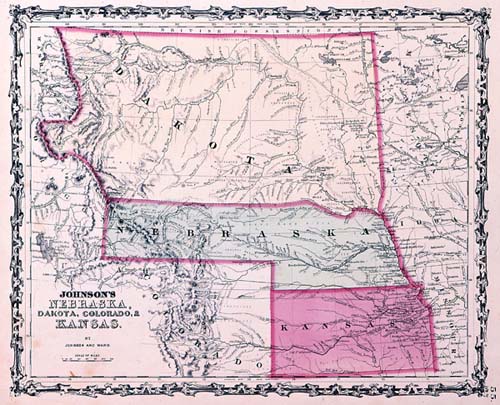
Though it wasn’t officially created until much later, Dakota Territory was carved from land inhabited by the Dakota Sioux and gained through the 1803 Louisiana Purchase. Shortly after the purchase, the Lewis and Clark expedition of 1804 established the area’s first permanent American settlement at Fort Pierre. Congress created Dakota Territory in March, 1861. Though Congress quickly reduced its size to that of North and South Dakota, the territory was originally a huge tract of land that eventually became North Dakota, South Dakota, and most of Wyoming and Montana. President Lincoln established a territorial government and appointed his personal physician, William Jayne of Springfield, Illinois as governor in 1861; at that time, the white population stood at only a little over 2,000. Dakota Territory boomed in the 1870s with the discovery of gold in the Black Hills and the expansion of railroads, and by the late 1880s, the territory had almost half a million non-Native American residents. The territory’s population could now justify statehood.

On November 2, 1889, both North and South Dakota were admitted to the United States. There was controversy about which state should be admitted first, and President Benjamin Harrison did not want to show favoritism. He shuffled the Act of Admissions papers for North Dakota and South Dakota, and signed one at random without recording which one it was. Consequently, the two states’ order of admission is listed alphabetically, with North Dakota noted as the 39th state and South Dakota the 40th state.

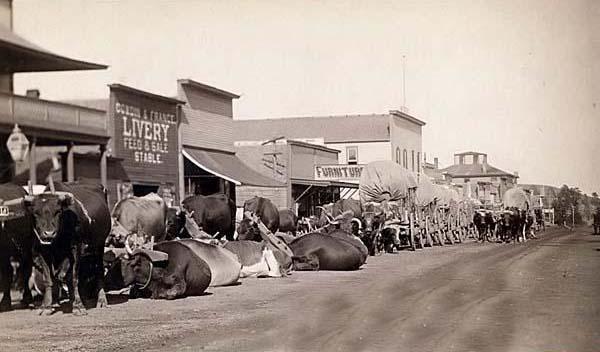
Line of Oxen and Wagons in Sturgis, Dakota Territory, 1887

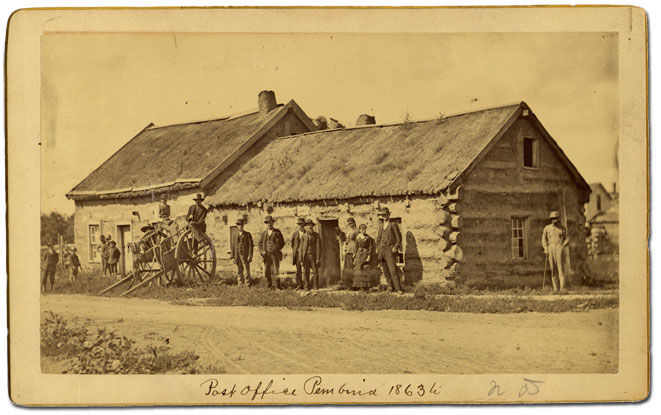
Post Office in Pembina, Dakota Territory, 1863

______________________________________________________________________________________


South Dakota Is Still Brand New

Thursday, May 17th, 2012
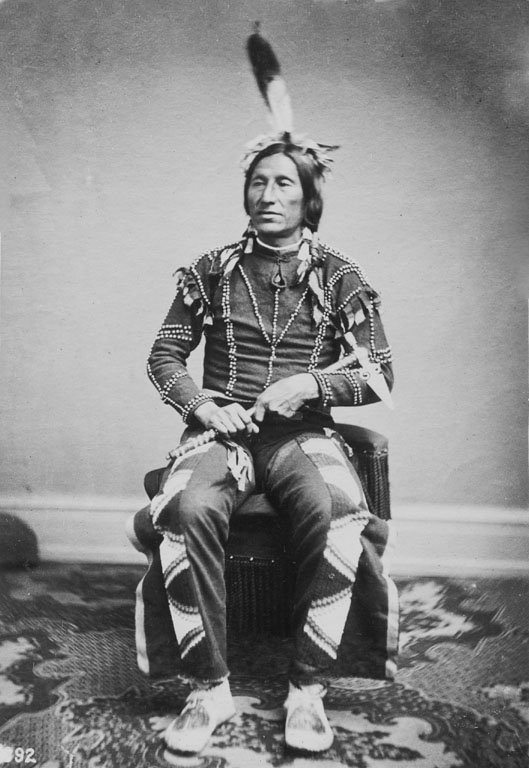
Little Thunder, Yankton Dakota (1887) courtesy of http://www.firstpeople.us/

Little Thunder, Yankton Dakota (1887) courtesy of http://www.firstpeople.us/

South Dakota was still a relatively new state when Canton’s ex-mayor, Oscar S. Gifford, made good on his hope to have an Indian insane asylum built there. Dakota Territory had been created in 1861, and took its name from the Dakota Sioux word meaning “allies.” This huge tract of land included what became North and South Dakota, and most of Montana and Wyoming. Two years later, the territory was reduced to the area of North and South Dakota only.

By the late 1880s, the northern part of the territory had about 190,000 people in it, and the southern part about 340,000. These numbers justified statehood. North Dakota became the 39th state and South Dakota the 40th, on November 2, 1889.

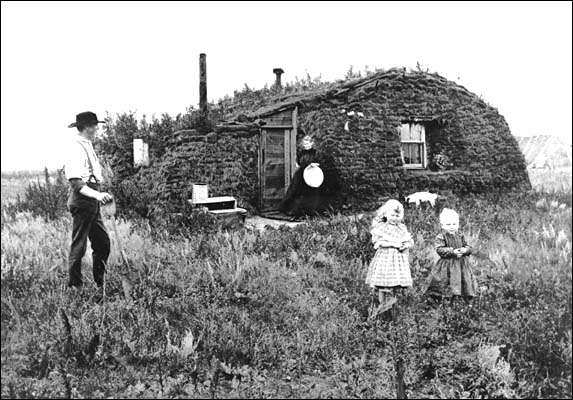
Sod Home courtesy Library of Congress Fred Hulstrand and F.A. Pazandak Photograph Collections

Sod Home courtesy Library of Congress Fred Hulstrand and F.A. Pazandak Photograph Collections

How Unusual Was Canton Asylum?

Friday, September 23rd, 2011

Oscar S. Gifford

Though early asylum superintendents in the U.S. had to both establish their profession and learn how to run asylums, they generally had at least some experience working in large institutions. Superintendents were medical men who usually acted as the  asylum’s chief physician, and supervised assistant physicians and attendants. The Canton Asylum for Insane Indians was unusual in that its first superintendent had no medical background whatsoever, and had never managed anything more complex than his own small business.

Gifford was born in New York, and spent part of his childhood in Wisconsin, and later, Illinois. He served in an  Elgin, Illinois unit during the Civil War, then studied law. He became a merchant and surveyor, and eventually a lawyer and a territorial delegate (from Dakota Territory). After a distinguished career, during which he helped guide South Dakota to statehood, Gifford was elected South Dakota’s representative to Congress. After he had moved back to Canton, South Dakota (where he had once been mayor), Gifford became superintendent of Canton Asylum.

Elgin, Illinois Street Scenes, courtesy Elgin Area Historical Society

Dakota Territory, courtesy South Dakota State Historical Society

______________________________________________________________________________________

Who Wants to Help?

Sunday, September 12th, 2010
Sioux Delegation, 1891, courtesy Library of Congress

Sioux Delegation, 1891, courtesy Library of Congress

Herbert Welsh (1851 – 1941) is associated most closely with the Indian Rights Association (IRA). The first meeting of the organization was held in his home on December 15, 1882; he served as Executive Secretary for many years. 

Welsh was a prosperous Philadelphian who traveled to Dakota Territory to visit the Sioux reservation at Pine Ridge. He came home with a new understanding of the harsh life so many Native Americans faced as wards of the government. He and the other founding members of the IRA were committed to righting the wrongs done to Native Americans and publicizing their situation.

His intentions were good, but misguided. Welsh wrote in 1882, “When this work shall be completed the Indian will cease to exist as a man, apart from other men, a stumbling block in the pathway of civilization . . . the greater blessings which he or his friends could desire will be his, – an honorable absorption into the common life of the people of the United States.”

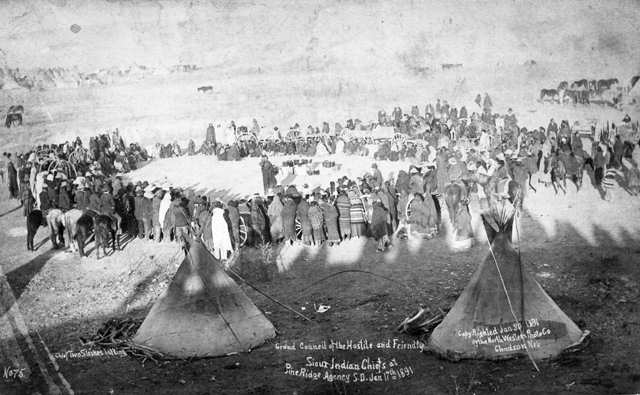
Council of Indians at Pine Ridge, January 17, 1891, courtesy Library of Congress

Council of Indians at Pine Ridge, January 17, 1891, courtesy Library of Congress

________________________________________________________

From Trapper Shanty to Canton

Tuesday, March 9th, 2010

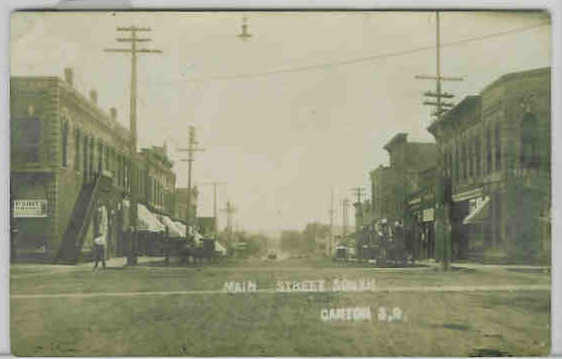
Canton stood in a spot that old maps referred to as Commerce City, a community that probably existed only in the minds of land speculators. Canton was founded in a spot called Trapper Shanty, which was a little dugout built by fur trappers. The first permanent settlers came in 1867, filing their claims in what was still Dakota Territory. Nobody liked the name Trapper Shanty and the townspeople eventually decided to name the settlement Canton for a couple of reasons. Some people thought the spot was directly opposite Canton, China. Others thought it meant gateway in Chinese.
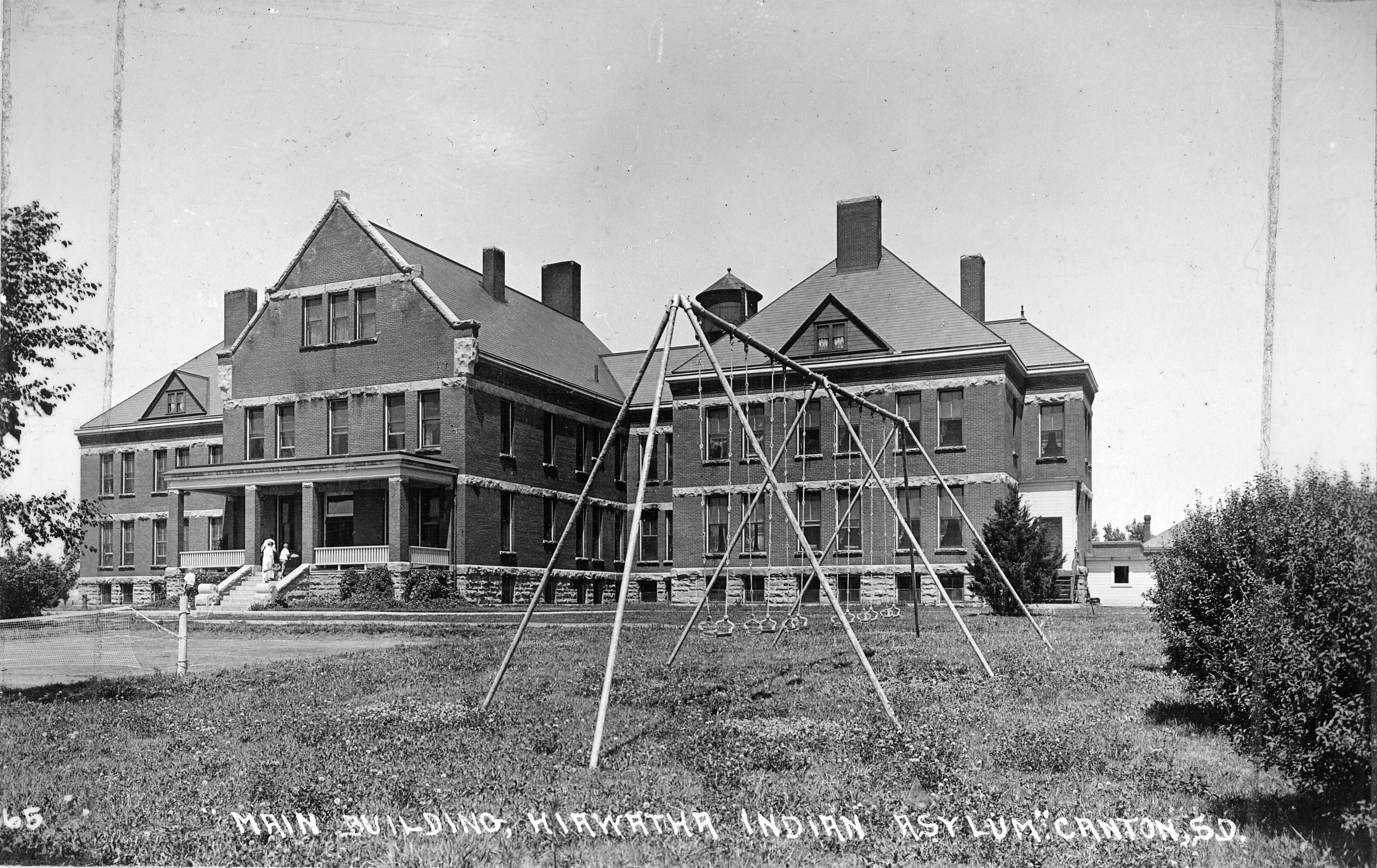
Even at this stage, townspeople wanted and expected their city to be important and prosperous. It quickly became a little boom town as pioneers moved through it, or settled and stayed, on their journey west. By the time South Dakota became a state in 1889, Canton residents were ready for bigger and better things. An insane asylum—the only one in the whole world built exclusively for insane Indians—would make the city famous. They embraced the institution, and later, defended it to the bitter end.

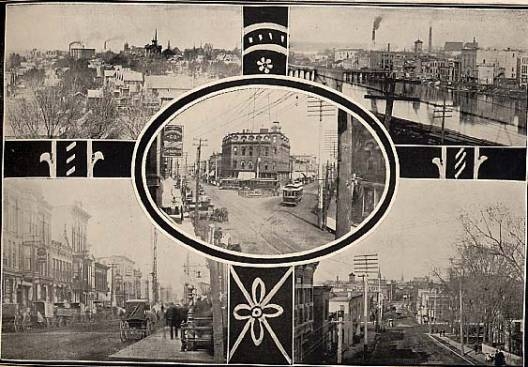
Canton Main Street, about 1907

Canton Main Street, about 1907

An expanded history of the city

_________________________________________________________