Posts Tagged ‘O.S. Gifford’

Power at the Canton Asylum for Insane Indians

Sunday, April 24th, 2011
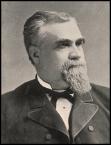
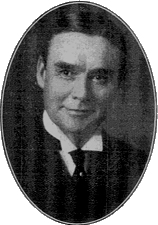
O.S. Gifford

O.S. Gifford

Asylum superintendents were powerful by the nature of their jobs (see previous post). The situation at the Canton Asylum for Insane Indians especially consolidated power in its superintendent, simply because there was no other likely person to share it.

When Canton Asylum opened on the last day of 1902, superintendent O.S. Gifford (a non-medical man) used the services of his assistant superintendent, Dr. John Turner. Though Gifford was ultimately responsible for the asylum and could call all the shots–which he sometimes did to the detriment of patients–he realized that some authority had to go to Turner as the only medical person at the facility.

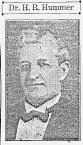
Dr. Harry R. Hummer

Dr. Harry R. Hummer

Harry R. Hummer replaced Gifford in 1908. Dr. Turner resigned after less than a year, fed up with Hummer’s arrogance and dismissive attitude. In August of 1909, Hummer received another assistant superintendent, Dr. L.M. Hardin, from the Leech Lake reservation. Early in 1910, Hardin quit in frustration. After that, Hummer never employed another physician at the asylum.

________________________________________________________________________
Who Came to Canton?

Sunday, July 25th, 2010
Canton, S. D., 1907, courtesy Library of Congress

Canton, S. D., 1907, courtesy Library of Congress

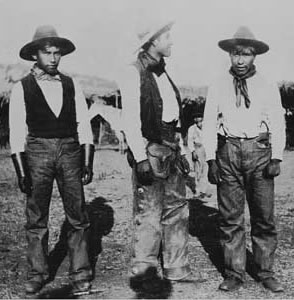
Patients began to trickle into the Canton Asylum for Insane Indians after it opened the last day of 1902. From January 1, 1903 to the end of the first fiscal year on June 30, 1903, ten males (all over 18 years of age) and six females (two of whom were under 18) were admitted to the asylum. During the fiscal year, one  patient died and two recovered.

An additional female was admitted in July, and by the time asylum superintendent O.S. Gifford (see previous posts) made his annual report at the end of August, 24 insane Indians had been ordered to the asylum. Nine tribes were represented among these patients: Cherokee, Comanche, Osage, Pawnee, Mission, Winnebago, Chippewa, Shoshone, and Sioux.

Coe Crawford, S.D. Governor, 1908

Coe Crawford, S.D. Governor, 1908

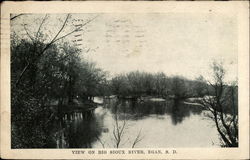
View of Big Sioux River (which flowed past the asylum) 1911

View of Big Sioux River (which flowed past the asylum) 1911

________________________________________________________
Comparing Canton Asylum

Sunday, May 23rd, 2010
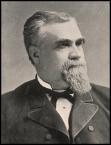
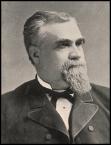
O.S. Gifford

O.S. Gifford

The Canton Asylum for Insane Indians was too small to compare to the large institutions created by Kirkbride, and it wasn’t built with any particular treatment plan in mind. Its first superintendent, O.S. Gifford, (see 2/25/2010 post) was not even a medical man. He had to travel to Washington, D.C. to see an example (St. Elizabeths) of the kind of institution he was to run.

Canton Asylum was a two-story building with four wings, and had a seven-foot fence around it. In keeping with other government institutions of its kind, however, it was lushly landscaped with over 1,000 trees and bushes that in time looked lovely.

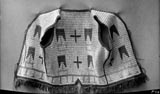
Because Gifford wasn’t an alienist, he defaulted to a type of moral treatment that consisted of giving patients chores to do, allowing them to fish and play games when possible, and even allowing them to act like Indians. He allowed native dancing except when it proved too much for excitable patients, and let women create beadwork. This was in direct contrast to most governmental attitudes toward Indians.

His laissez-faire approach both helped and hurt the patients at Canton Asylum. Though he had no pet psychological theories to impose, he also couldn’t be bothered with setting up real programs to enable cures. When patients ran away or became hard to handle, his staff just got out the shackles.

Beaded Vest (1890-1900), courtesy Western History/Genealogy Department, Denver Public Library

Beaded Vest (1890-1900), courtesy Western History/Genealogy Department, Denver Public Library

Tobacco Bags (1895) courtesy Western History/Genealogy Department, Denver Public Library

Tobacco Bags (1895) courtesy Western History/Genealogy Department, Denver Public Library

________________________________________________________

Death at Canton Asylum

Sunday, April 18th, 2010

Robert Brings Plenty, a Sioux Indian from South Dakota’s Pine Ridge reservation, was one of  Canton Asylum’s first patients. He lasted less than one year, dying of (probably) an epileptic episode on May 20, 1903.

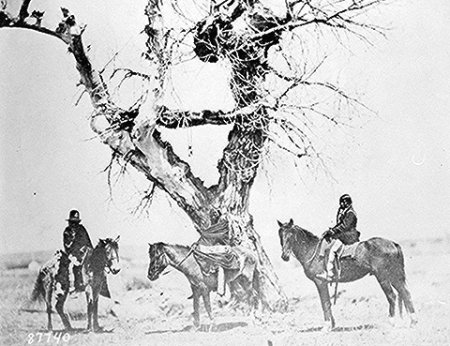
The Sioux typically dressed a dead person in his best clothes, including beaded moccasins so he could walk to the spirit world, and then sewed him into a deerskin or buffalo shroud. The body was placed in a tree so birds and small animals could feed on it until it dropped to the ground to feed bigger animals. Thus, the circle of life went on.

Canton Asylum’s Superintendent, O.S. Gifford, wrote to Pine Ridge reservation and asked what to do with Brings Plenty’s body. He didn’t get a reply. Robert Brings Plenty was buried on the asylum grounds with an Episcopal ceremony.

Tree Burial of the Oglala Sioux near Ft. Laramie, Wyo. courtesy National Archives

Tree Burial of the Oglala Sioux near Ft. Laramie, Wyo. courtesy National Archives

Dakota Scaffold Burial courtesy National Archives

Dakota Scaffold Burial courtesy National Archives

_________________________________________________________