Posts Tagged ‘commissioner of Indian affairs’
Thursday, May 9th, 2013

Cato Sells, Commissioner of Indian Affairs in 1921
Admissions to the Canton Asylum for Insane Indians were routed through reservation Indian agents (later superintendents), who performed much of the administrative and supervisory functions concerned with running these population centers. The asylum usually had several dozen applications on file, and tried to fill vacancies with patients who had been waiting the longest. Sometimes urgent or acute cases took precedence, but there were always more applications than room at the asylum. Dr. Harry Hummer was often accused of poor record-keeping, but he was apparently required to take a “census” of patients at the end of each fiscal year (June 30). Not all of these survive, but those that do at least give a snapshot of the asylum population. In 1921:
There were 45 male and 45 female patients. Since opening, there had been 146 male and 114 female patients, so the patient population tended to skew male.
There were 28 tribes represented. Since opening, 50 tribes were represented. The greatest numbers of patients came from the Chippewa, Menominee, and Sioux, with the latter being highest. This undoubtedly resulted because the asylum was located near Sioux reservations; studies had always shown that asylums served more people in close geographic range than farther out. States that tried to locate asylums centrally to be fair to an entire region were frustrated in these attempts because of this natural pattern.
Since opening, 62 patients had died of respiratory diseases, mainly tuberculosis (45) and croupous pneumonia (9). From 1903 to 1921, 115 patients had died.

TB Sanitorium Buildings, Phoenix Indian School circa 1890 to 1910, courtesy National Archives

Alaskan TB Patients, courtesy Indian Health Service
______________________________________________________________________________________
Tags: admission procedure to Canton Asylum, Cato Sells, commissioner of Indian affairs, Dr. Harry Hummer, number of deaths at Canton Asylum, TB deaths among Canton Asylum patients, tribes at Canton Asylum
Posted in BIA Bureau of Indian Affairs, Canton Asylum for Insane Indians, Indian tribes, medical history | No Comments »
Thursday, May 2nd, 2013

Music Was Popular with Patients
Though Dr. Harry Hummer failed in many important areas when it came to providing care to his patients, he did try to provide occupations for the patients who wanted to be active. Some letters from patients to the Commissioner of Indian Affairs speak of being grateful for chores because being busy helped pass the time. Some also make reference to trips to town in the asylum automobile, going to the movies, and other pleasurable experiences.
In an inspector’s report from 1916, the asylum obviously had outdoor amusements. Other visitors often spoke of seeing patients strolling on the lawns or sitting in chairs when the weather was pleasant. However, the inspector also noted: “Calisthentics,[sic] breathing exercises, and marching are provided for such patients as are able to receive physical training. The play-ground equipment consists of outfits for baseball, basket ball, quoits, tennis, and one giant stride, six swings, one portable see-saw, one teeter tennis and a sixteen pound shot, all of which are popular especially the swings and shot. The play-ground exercises are supervised by the attendants.”
One of the primary pictures of the Canton Asylum for Insane Indians shows some swings in the foreground.

Trolley to an Asylum

Patients Putting on a Play, Long Island State Hospital
______________________________________________________________________________________
Tags: amusements for insane asylum patients, chores for patients at insane asylums, commissioner of Indian affairs, Dr. Harry Hummer, Long Island State Hospital, occupational therapy, Oregon Insane Asylum
Posted in BIA Bureau of Indian Affairs, Canton Asylum for Insane Indians | No Comments »
Sunday, January 27th, 2013

William A. Jones was Commissioner of Indian Affairs When the Canton Asylum Opened
Few people ever wanted to enter an insane asylum, no matter how well run or up-to-date it was. And, like all institutions run by fallible human beings, asylums were not immune to mistakes and misjudgments on the part of their staffs. One problem the Canton Asylum for Insane Indians faced that St. Elizabeths and McLean didn’t (see last few posts) came as direct consequence of its long-distance oversight.
The Canton Asylum for Insane Indians was not under a trustee or board of visitors system like the other two asylums, though it is certainly untrue that this establishment was never inspected or investigated. However, the asylum was managed for the most part from thousands of miles away. The asylum’s superintendent in Canton reported directly to the commissioner of Indian Affairs in Washington, DC, and the seven commissioners who held the position during the time the asylum was open very seldom, if ever, actually visited the place.
Agents or inspectors from the Indian Office did come by fairly regularly, but none of these men were psychiatrists. They found it difficult to determine how well the patients were being treated for mental health issues, and usually confined themselves to commenting on the state of the buildings and how efficiently the superintendent ran his farming operation. Medical staff from the Indian Office eventually began visiting much more often as the asylum grew in size and came to the notice of the commissioner through complaints. Dr. Emil Krulish became a frequent visitor and made numerous criticisms that honed in on treatment and the way the superintendent, Dr. Harry Hummer, managed his personnel and patients. However, his voice was ignored and Hummer continued to thrive in his position.

House of Indian Agent Will Hayes, circa 1920-1940, courtesy Library of Congress

Home of Indian Agent William Shelton, circa 1910, courtesy Denver Public Library
______________________________________________________________________________________
Tags: commissioner of Indian affairs, Commissioner William A. Jones, Dr. Emil Krulish, Dr. Harry Hummer, Indian Office, McLean Asylum for the Insane, oversight for insane asylums, St. Elizabeths
Posted in BIA Bureau of Indian Affairs, Canton / Commerce City, Canton Asylum for Insane Indians, Insanity, St. Elizabeths Hospital | No Comments »
Thursday, January 10th, 2013

Main Building, St. Elizabeths, circa 1910-1925, courtesy Library of Congress
In 1917, the National Committee for Mental Hygiene (see last post) canvased various hospitals to see where soldiers and sailors could be treated for mental conditions created by the war. They naturally turned to government facilities like veterans’ hospitals and the government’s two existing insane asylums. The larger of these latter facilities, St. Elizabeths, was already charged with the care of insane military members. Its superintendent, Dr. William White, submitted his thoughts on the matter to the Secretary of the Interior, saying that a large influx of insane patients would require a correspondingly large increase in facilities. The plan in place was to ask for statutory authority “to distribute the overflow from the present organization [St. Elizabeths] to the several State hospitals.” Using caution before commitment, White asked how many patients might be expected, and whether or not the Secretary wanted them housed in temporary or semi-permanent structures.
Dr. Harry Hummer, superintendent at the government’s other insane asylum, the Canton Asylum for Insane Indians, offered his own thoughts about the ability of St. Elizabeths to care for mentally unstable soldiers. He wrote to the commissioner of Indian Affairs: “It occurs to me that with the already overcrowded condition at St. Elizabeth’s Hospital, Washington, D. C., it will be impossible for the authorities of that institution to care for the rather sudden accession of cases of mental disease which the present war will necessarily entail. . . . . It is barely possible that the federal government will decide that each State shall care for its own insane. In that event it will be necessary for the State of South Dakota to care for its insane, either at the Asylum at Yankton or otherwise.”
Hummer asked the practical question concerning the number of patients who might need care, and provided his own tentative calculations for the commissioner. Hummer estimated that 20-25 percent of South Dakota’s soldiers and sailors might become incapacitated during the war, and that of that number, ten percent would be mental cases. Therefore, he thought that one-fortieth of the men enlisted from the state would need to be cared for at one of its institutions.
Hummer added: “I am sorry that your Office decided that we should not build the proposed epileptic cottage, as this would have given us additional beds which might have been used for the purpose now in question.”

Insane Asylum at Yankton, South Dakota

Wounded British Soldiers in a Trench, courtesy Library of Congress
______________________________________________________________________________________
Tags: commissioner of Indian affairs, Dr. Harry Hummer, Dr. William White, epileptic cottage, National Committee for Mental Hygiene, shell shock, St. Elizabeths, Yankton SD insane asylum
Posted in BIA Bureau of Indian Affairs, Canton Asylum for Insane Indians, Insanity, St. Elizabeths Hospital | No Comments »
Thursday, December 20th, 2012

Otis W. Leader, Depicted by a French Artist as the Ideal American Soldier
Many people are familiar with the military contributions of Native American Code Talkers during WWII, but don’t know about Native American contributions to the Great War. Over 17,000 males registered for the draft, but many other men volunteered to enter the military. Data on these volunteers are not as firm, but perhaps half of all Native Americans who enlisted were volunteers. Proportionally, as many or more Native Americans served in the military as other adult American men. Tribal participation rates varied: Oklahoma tribes entered the military at the highest rates, while Navajo and Pueblo men served at the lowest.*
Students from Indian boarding schools like Carlisle volunteered in great numbers, which may have been due both to their familiarity with the military from their school experience as well as a desire to get away from the boarding school environment. Almost without a voice of dissent, whites in authority over these students–all the way up to commissioner of Indian Affairs, Cato Sells–approved of this massive exodus into the military. They attributed it to the success of the Indian Office’s assimilation policy and patriotism on the part of students. Both these factors may have entered into student decisions to enlist, but a thirst for adventure and an equally powerful hatred of their substandard schools were probably just as contributory. Unfortunately, some of these enthusiastic students were underage, with teachers (as the only adults even able to stand in as pseudo-parents) usually turning a blind eye or actually encouraging enlistment.
*Statistics about Native American participation in the military during WWI are taken from Russel Lawrence Barsh’s “American Indians in the Great War; Ethnohistory 38:3 (Summer, 1991).

Gus Sharlow, Ojibwa WWI Veteran, courtesy Wisconsin Historical Images

Parade Field at Carlisle Barracks in Carlisle, PA, courtesy U. S. Army
______________________________________________________________________________________
Tags: Carlisle Indian School, Cato Sells, commissioner of Indian affairs, Gus Sharlow, Indian boarding schools, Native American participation in the military, Navajo, Ojibwa, Pueblo, the Great War, WWI
Posted in BIA Bureau of Indian Affairs, Canton Asylum for Insane Indians, Indian tribes | No Comments »
Thursday, December 13th, 2012

Douglas Fairbanks and Charlie Chaplin Promoting Liberty Bonds in 1918
During WWI, the U.S. government raised money to support its war efforts through Liberty Bonds. Private citizens could purchase bonds, and after the war redeem them for the purchase price plus interest. The government issued four sets of bonds:
* The Emergency Loan Act (April 24, 1917) which set interest rates at 3.5%
* The Second Liberty Loan (October 1, 1917) which set interest rates at 4%
* The Third Liberty Loan (April 5, 1918) which set interest rates at 4.5%
* The Fourth Liberty Loan (September 28, 1918) which set interest rates at 4.25%
Several patients at the Canton Asylum for Insane Indians purchased Liberty Bonds. As superintendent and chief disbursing agent for the asylum, Dr. Harry Hummer kept track of who held bonds, and their value. In a letter to the commissioner of Indian Affairs dated May 16, 1918, he listed the Second Liberty Loan Bonds held by patients. Kittie Spicer, Josephine Wells, Davis Roubideaux, Frederick Charging Eagle, Willie McCarthy, Luke Stands-by-Him, Robert Thompson, Joseph Marshall, and Edward Hedges owned bonds valued at $1,350 dollars on which $27 in interest had accrued.

Liberty Loan Poster

Third Liberty Loan Poster
______________________________________________________________________________________
Tags: Charlie Chaplin, commissioner of Indian affairs, Douglas Fairbanks, Dr. Harry Hummer, Liberty Bond rally, Liberty Bonds, Third Liberty Loan, WWI
Posted in BIA Bureau of Indian Affairs, Canton Asylum for Insane Indians, Indian tribes | No Comments »
Sunday, December 9th, 2012

Volunteers at St. Elizabeths Hospital who Worked With Shell Shocked Vets, courtesy George Washington University
Dr. Hummer faced other difficulties associated with the war effort (see last post), particularly a troublesome personnel shortage. He told the commissioner of Indian Affairs that “it is extremely difficult to fill the existing vacancies and I am compelled to keep two or three employees who should be separated.” Since Hummer was typically just fine with a bare-bones staff, his situation at this point was dire; in August, 1918, he had only one male and one female attendant on staff (he should have had three of each). Hummer suggested an increase in pay as a possible solution to his problem, to $40/month with board and lodging for male attendants, and $35/month with board and lodging for females.
A project near and dear to Hummer’s heart also gave way to the war effort: the Indian Office denied his request for an epileptic cottage. This was partly because the asylum still had some vacancies and didn’t seem to need additional rooms. More importantly, as the assistant commissioner of Indian Affairs pointed out, the administration was already in the middle of a huge building program that “will of necessity withdraw carpenters from every section of the country.” Hummer may have been able to counter this with an offer by locals to help with construction, but even he could not argue with E. B. Meritt’s second consideration: there was a need for economy elsewhere in the expenditure of public funds “in order to more successfully prosecute the war.”

U.S. Troops Cross Moselle Into Germany, courtesy Notre Dame University

Classroom of American Red Cross Students, 1917 or 1918, courtesy Library of Congress
Hummer had perhaps anticipated this emphasis on war concerns when he made the following suggestion: “It is possible that the present war will necessitate the construction of another building at this place to care for the insane Indian soldiers or sailors, provided your Office deems this proper.” One way or another, the superintendent wanted additional buildings and patients.
______________________________________________________________________________________
Tags: American Red Cross students, commissioner of Indian affairs, Dr. Harry Hummer, E. B. Meritt, Indian Office, St. Elizabeths Hospital, WWI
Posted in BIA Bureau of Indian Affairs, Canton Asylum for Insane Indians, Insanity, St. Elizabeths Hospital | No Comments »
Thursday, December 6th, 2012
The Depression brought hard times to the country, South Dakota, and the Canton Asylum for Insane Indians. The 1930s was not the only difficult period it had faced, though–the Great War (WWI) had also strained the asylum’s capabilities.

Poster Urging Americans to Use Various Grains, courtesy Library of Congress
All Americans were urged to conserve food and materials, and many stirring posters reminded citizens of how vital their cooperation was to the war effort. Along with the rest of the country, the asylum supported American troops by cutting back on food so that the excess could be sent to soldiers overseas; meatless Mondays were a staple throughout the country. Superintendent Dr. Harry Hummer also initiated other measures to counter “the food situation” brought about by the war. In a letter dated July 4, 1918, Hummer reported to the commissioner of Indian Affairs that he had had to institute “one beefless, one porkless, and one meatless days” each week, along with six extra meatless meals each week. No one liked the new menu, and Hummer reported “a considerable degree of grumbling and discontent among the less patriotic of our employees.”

- Mina C. Winkle, Head of Lecture Bureau of Food Administration, 1917, courtesy National Archives

Flour Being Unloaded and Carried to Red Cross Warehouse, courtesy Library of Congress
______________________________________________________________________________________
Tags: commissioner of Indian affairs, Dr. Harry Hummer, Great Depression, Great War, Great War food shortages, Meatless Mondays, WWI Posters, WWI Red Cross
Posted in BIA Bureau of Indian Affairs, Canton Asylum for Insane Indians | No Comments »
Thursday, November 15th, 2012

Family on South Dakota Prairie
Most people in Canton, SD probably knew each other or knew of each other–if they didn’t, it wasn’t because The Sioux Valley News wasn’t keeping them informed. The paper filled its pages with standard fare: world and national events, politics, serialized novels, and advertisements. Whenever it could, the paper added interest by personalizing local news. Most newspapers of the day had some sort of social section, which featured prominent citizens and their various parties, trips, and visitors. Similarly, The Sioux Valley News reported on the activities of Canton’s citizens, along with the activities of people in neighboring towns like Lennox, Hudson, and Beloit.
However, the newspaper went even further by printing the names and details of less-than-newsworthy events. Within an advertisement for Cloud Bros. & Johnson Co., the paper printed the names of six people who had bought buggies from them the previous week. (Oct. 26, 1906) When Oscar Gifford received his appointment as superintendent of the Canton Asylum for Insane Indians, the paper persuaded him to let them run the letter he had received from the Commissioner of Indian Affairs. Besides the news that he had been given the job, townspeople could also read that Gifford was to receive “2,500.00 per annum” for it. (Oct. 25, 1901) Whether he had desired that this bit of financial information be broadcasted is unknown. Likewise, when the paper printed the names of the asylum’s first staff members, it added, “Notwithstanding the most specific promises and a petition largely signed by prominent republicans of our city and county, Mrs. Naylor was not given a position at the asylum.” (Jan. 2, 1903) One has to wonder whether this public acknowledgement of her snub brought Mrs. Naylor further embarrassment or a sense of vindication.

Hardware Store in Humboldt, SD, courtesy Mundt Archives

Chautauqua Auditorium in Canton, SD, circa 1902
______________________________________________________________________________________
Tags: Beloit SD, Chautauqua, Cloud Bros. & Johnson Co., commissioner of Indian affairs, Hudson SD, Lennox SD, Oscar Gifford, The Sioux Valley News
Posted in 1900s newspapers, BIA Bureau of Indian Affairs, Canton / Commerce City, Canton Asylum for Insane Indians | No Comments »
Thursday, September 6th, 2012

Menominee Indian Family, 1931
The government always liked to gather statistics (see last post), and Dr. Hummer was forced to complete many reports for the Commissioner of Indian Affairs. A report from June 30, 1924 gives a good snapshot of the institution. There were 50 males and 47 females from 31 different tribes; six patients were of unknown tribal affiliation. At the time of the report, the Sioux and Chippewa tribes were disproportionally represented; 19 patients were Sioux, and 14 were Chippewa. Statistics since opening told the same story: 68 Sioux had been admitted since 1902, 40 Chippewa, and 20 Menominee.
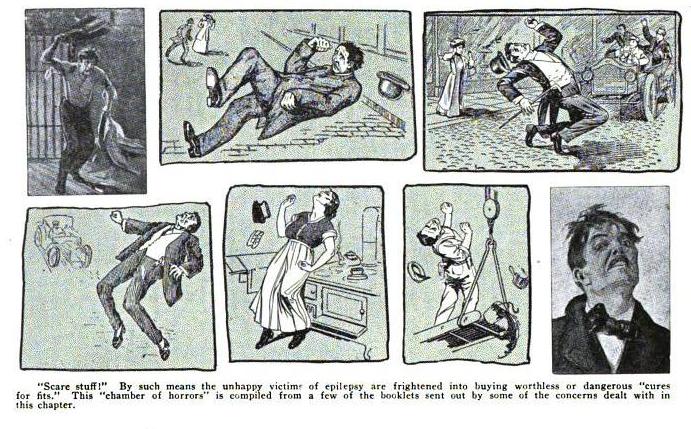
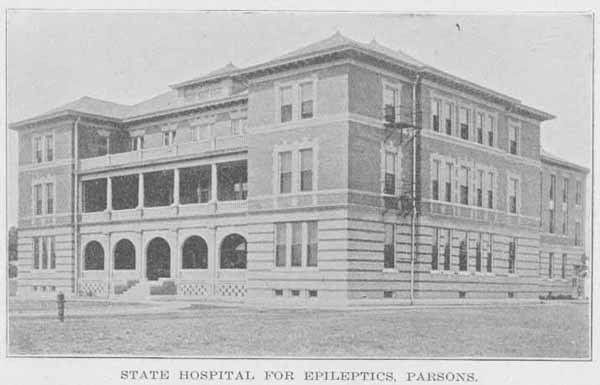
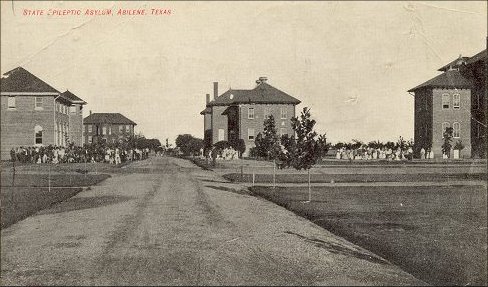
Though Hummer continually advocated for an epileptic cottage, epilepsy did not seem to be his biggest problem. Before the asylum closed, an independent doctor from St. Elizabeths noted that Hummer had lumped patients with any kind of convulsions into “epileptic” status, even though they were not truly epileptic. What Hummer really needed were good protocols and staff to care for lung issues. By 1924, the asylum had had 143 deaths. Fifty-one of them were from tuberculosis, and another 17 from some type of pneumonia. Only 14 patients had died of epileptic convulsions, with another four dying from exhaustion following convulsions.

Chippewa Indians in Ceremonial Dress, courtesy University of Minnesota, Duluth

Calvin Coolidge Meets with Sioux Indians from Rosebud Reservation on Lawn of White House, 1925
______________________________________________________________________________________
Tags: Chippewa, commissioner of Indian affairs, death from epilepsy, Menominee, Native American deaths from tuberculosis, Sioux
Posted in BIA Bureau of Indian Affairs, Canton Asylum for Insane Indians, Indian tribes, medical history, St. Elizabeths Hospital | No Comments »